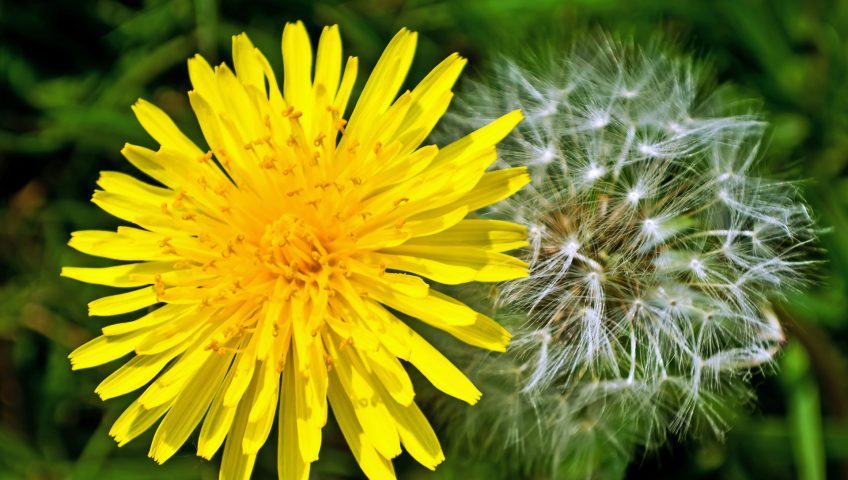
Dandelions are one of the most common lawn weeds in Pennsylvania and New Jersey, and they spread quickly if not properly controlled. Dandelions are most effectively controlled by applying a targeted broadleaf herbicide in the Spring. Ongoing management of dandelions includes maintaining a thick lawn and mowing at the correct height.
If you’re already seeing dandelions in your yard, don’t worry - there are still effective ways to control and eliminate them.
What Are Dandelions?
Dandelions (Taraxacum officinale) are a perennial broadleaf weed that re-emerge each spring from a deep taproot, often reaching 6 to 18 inches below the soil surface. Because the root survives winter dormancy, simply pulling the visible plant rarely solves the problem. Even a small fragment of taproot left in the ground can regenerate.
They thrive in full sun and can grow in virtually any soil type, which is why they appear in lawns, driveways, garden beds, and cracks in pavement alike. Their yellow flowers mature into white seed heads that disperse easily on the wind - a single dandelion plant can produce more than 150 seeds per flower head.
Why Dandelions Keep Coming Back
Even if dandelions appear to die off in the fall, their taproots remain alive underground, storing energy for the next growing season. So while they may seem to actually die out in the fall, the taproots of the dandelions stay intact deep under the soil and begin to sprout once again the following spring.
This is why surface-level removal (like mowing or pulling the top) is not fully effective; the root system is still intact.
When Do Dandelions Grow in Pennsylvania and New Jersey?
Timing matters for effective control. Here's what the dandelion growth cycle looks like in our region:
| Season | What's Happening |
| Late Fall (Oct–Nov) | Plant goes dormant, but taproot is active |
| Early Spring (Mar–Apr) | First yellow flowers emerge |
| Late Spring (May) | Seed heads form and disperse |
| Summer | Growth slows in heat |
| Early Fall (Sept–Oct) | Second flush of growth |
In PA and NJ, the main dandelion season runs from late March through May, with a secondary flush in September and October. Pre-emergent herbicides are generally not effective on dandelions since they germinate at very low soil temperatures (as low as 50°F), so post-emergent and taproot-targeting products are preferred.
How to Prevent Dandelions (Best Long-Term Strategy)
Maintain a Thick, Healthy Lawn
A thick lawn is one of your best long-term defenses. Dandelions struggle to establish in dense turf because they can't compete with established grass roots for water and nutrients.
To reduce growth:
- Overseed regularly
- Fertilize appropriately
- Improve soil health
- Keep grass at a proper height
A dense lawn creates natural competition, making it harder for weeds to establish.
How to Control Dandelions After They Appear
Of course, you don’t always get ahead of the problem or perhaps you’re dealing with a situation that you didn’t cause, such as purchasing a new home. If dandelions are already growing in your lawn, you still have options.
1. Use Targeted Broadleaf Herbicide in the Spring
A broadleaf herbicide is a treatment that will target the unwanted weed without harming the grass around it (because grass doesn’t have broad leaves). Professional-grade treatments:
- Kill the plant down to the root
- Prevent further spread
- Minimize damage to surrounding grass
2. Mow your lawn properly to discourage dandelion growth
Many homeowners wonder if mowing their lawn will control dandelions. Yes, it can, but only when done correctly.
Mow at a Higher Height to Control Dandelion Growth
Keeping your grass slightly taller (mowing at 3-4 inches):
- Blocks sunlight from reaching dandelions
- Encourages deeper grass root growth
- Improves overall lawn density
Short mowing actually makes the problem worse by weakening your lawn and giving weeds more opportunity to grow. When you mow too short, you’re not buying yourself extra time before needing to mow again. Also, never mow when seed heads (fluffy white parts) have formed; you'll accelerate spreading across your lawn.
Dandelions vs. Other Common PA/NJ Lawn Weeds
Dandelions are often confused with similar-looking broadleaf weeds. Here's a quick comparison:
| Weed | Leaf Shape | Flower | Taproot Depth |
| Dandelion | Jagged, deeply lobed | Yellow, single stem | 6–18 inches |
| Cat's ear | Hairy, less lobed | Yellow, branched stems | Shallow |
| Hawkweed | Narrow, hairy | Yellow, clustered | Shallow |
| Wild lettuce | Smooth, waxy | Pale yellow | Moderate |
Correct identification matters because some look-alikes respond differently to herbicides. If you have difficulty identifying the type of weed, a lawn care professional will be able to confidently and correctly identify and recommend the best treatment for removing it.
FAQs: Dandelion Control
Q: When is the best time to treat dandelions?
A: Treat as early in spring as possible, before seed heads develop. Once seeds disperse, you're managing both existing plants and future germination.
Q: Why do dandelions keep coming back every year?
A: Dandelions are perennial - the taproot survives winter and the plant re-emerges each spring. New plants also establish from windblown seed. Consistent, multi-season management is the most effective long-term approach.
Q: Is mowing enough to get rid of dandelions?
A: No. Mowing (at the correct height) helps manage growth but does not eliminate the root system. Mowing once seed heads (fluffy white parts) have formed will actually make the problem worse.
Q: Can dandelions damage my lawn?
A: Dandelions don't kill grass directly, but their broad leaves shade surrounding turf, weakening the grass underneath. Left unchecked, large dandelion populations can lead to significant bare patches.
Q: How do I stop dandelions from spreading?
A: Maintain a thick lawn, mow properly, and apply post-emergent herbicide treatments to stop seed development and root regrowth.
Professional Dandelion Control in PA & NJ
For homeowners who want consistent, long-term results, professional lawn care services provide:
- Seasonal weed control programs
- Proper herbicide timing and application
- Lawn health improvement strategies
Blue Grass Lawn Service & Landscaping, Inc. specializes in comprehensive lawn care programs designed for Pennsylvania and New Jersey conditions, helping you eliminate dandelions while strengthening your lawn overall.
Call (215) 364-7000 or request a FREE quote here to get started.
Featured Image: "Dandelions," by George Hodan, licensed under CC0 1.0