Common Types of Lawn Fungus in PA & NJ: Signs, Causes, and Prevention
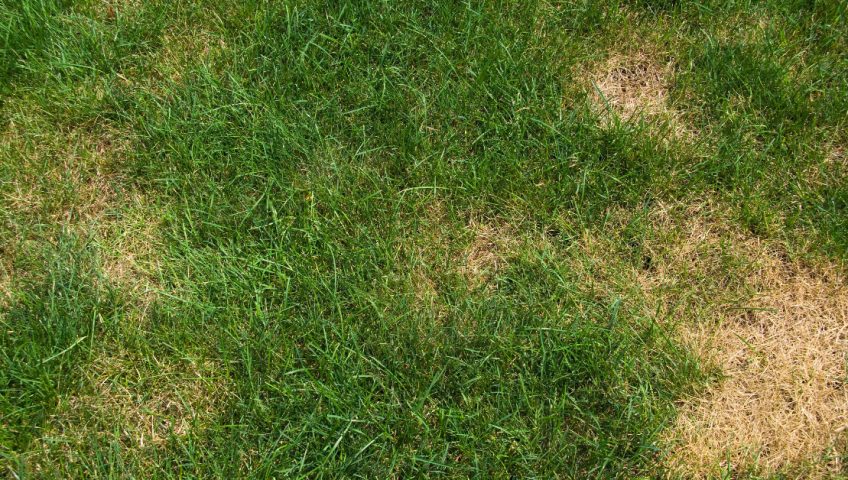
Brown, yellow, or thinning patches in your lawn can be frustrating, especially when they seem to appear overnight. In many cases, these patches are caused by lawn fungus. Fungal diseases are naturally present in most lawns, but they can spread when grass is stressed by wet weather, overwatering, humidity, drought, compacted soil, poor mowing habits, or an unbalanced lawn care routine.
For homeowners in Bucks County, Montgomery County, and Mercer County, lawn fungus is especially common during periods of warm, humid weather, heavy rain, or rapid temperature changes. Knowing what to look for can help you respond before the damage spreads.
What Are the Most Common Types of Lawn Fungus?
The most common lawn fungus problems in Pennsylvania and New Jersey lawns include summer patch, red thread, dollar spot, snow mold, and fairy ring. These diseases often appear as brown, yellow, reddish, or circular patches in the grass. Lawn fungus is more likely to develop when grass is stressed by excess moisture, poor drainage, compacted soil, dull mower blades, improper mowing height, or inconsistent fertilization.
Lawn fungus, which can sometimes be misidentified as weeds, appears in a variety of shapes and sizes.
Summer Patch
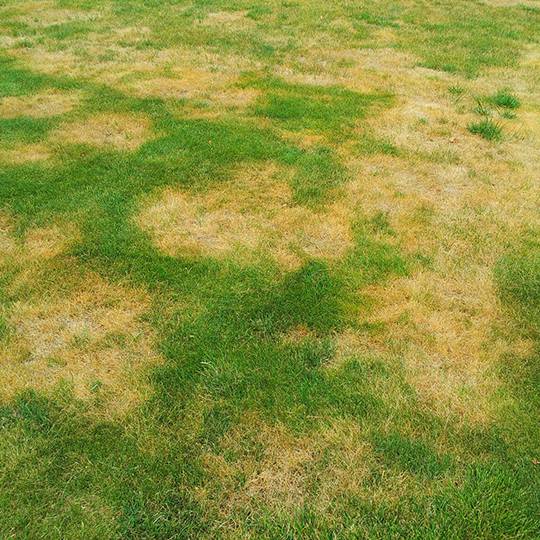
Symptoms of summer patch include rings and circular patches of dead or dying turf grass. Most likely there is a center or surrounding area of healthy grass in or around what we call a doughnut style patch. Therefore, allowing those dead spots to become full of many forms of weeds. You may see this during mid-summer, after heavy rainfall or consistent rain.
Red Thread
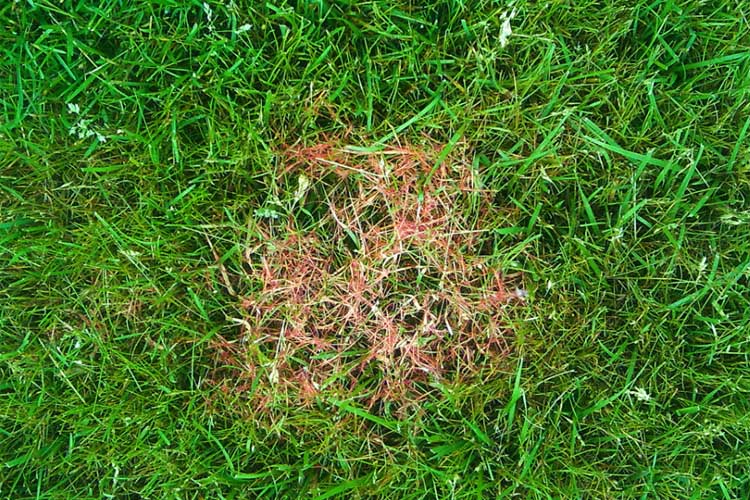
Red thread is often a sign of nitrogen-deficient turf. The disease rarely kills grass outright but leaves lawns looking patchy and discolored for weeks. The symptoms and signs of red thread are distinctive, most common among morning dew, water from rain or irrigation issues. A coral pink or reddish layer of fungal growth known as mycelium can be seen on leaves and sheaths. Development of this type of disease is prompted by cool, wet weather (65-70 degrees). The most obvious times you may see this is in the spring or early autumn. Like many fungal diseases, red thread is more common during long periods of wet weather.
Dollar Spot
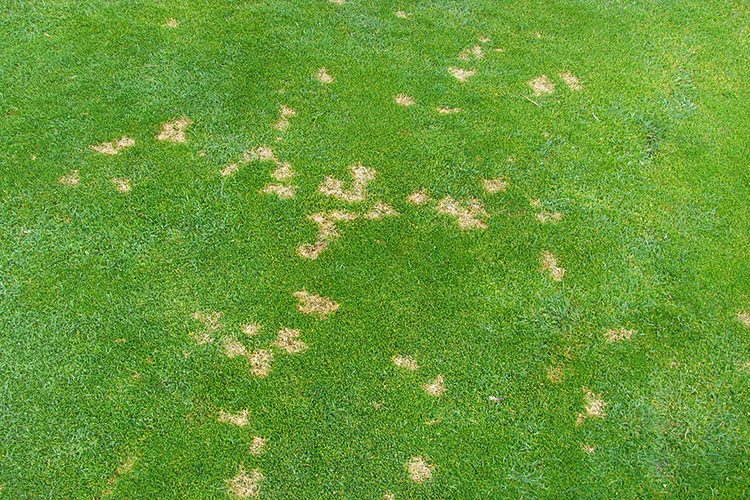
Long periods of high humidity or frequent rainfall may cause the most severe outbreaks. Watering your lawn at the wrong time may extend or increase the incidence of disease. Therefore, the most common outbreaks occur when temperatures are moderately warm and change rapidly, such as warm days turn into cold nights. Infected areas 4 inches or larger may run together, allowing for much larger patches. Although patches growing to 12 feet wide are not uncommon.
Snow Mold
Snow mold is a lawn fungus that typically becomes noticeable in early spring, after snow has melted and the grass is exposed again. It can injure or even kill sections of turf, leaving behind discolored, straw-like, or matted patches in the lawn.
This disease is most common when cool-season grass has been covered by snow for an extended period of time. As temperatures begin to rise into the 32–45°F range, fungal activity can increase. There are two main types of snow mold: gray snow mold and pink snow mold, which are generally identified by their coloring.
After the snow clears, homeowners may notice circular patches that range from just a few inches wide to several feet across. These areas may look flattened, crusty, or stuck together. Because many lawns in Pennsylvania and New Jersey are made up of cool-season grasses and experience periods of winter snow cover, snow mold can be a common spring lawn issue in our region.

Fairy Ring
Fairy ring appears as circles or arcs of darker green grass, mushrooms, or dead turf. It’s caused by decomposing organic matter (like old tree roots or buried wood) underground. While rarely fatal to a lawn, fairy ring is persistent and can recur in the same spot year after year. Improving drainage and removing buried organic debris during lawn renovation can reduce recurrence.
Image Source: M J Richardson / Fairy ring and fairy clubs at Hopetoun House / CC BY-SA 2.0
Lawn Care Tips for Preventing Lawn Fungus
Don't Cut Your Grass Too Short
Not only does it help to prevent weeds from growing, but cutting no more than one third of the length of your grass off keeps it strong and healthy. Cutting your grass too short weakens the grass, which increases the risk of a fungal disease.
Hire a Reputable Lawn Care Company
Keeping your yard healthy requires regular lawn maintenance. It’s essential your lawn care company is well aware of the types of fungal diseases that are common in your area. For over 40 years, we have kept our clients’ yards beautiful and healthy in Bucks and Montgomery Counties and the surrounding areas. Over that time, we have learned what to anticipate throughout the year and our lawn care plans reflect that!
Apply Only as Much Fertilizer as you Need
Giving your grass the nutrients it needs is key to promoting a strong root system. However, applying too much or too little fertilizer stresses the grass. A strong, healthy lawn is the best defense against fungal diseases.
Get Rid of Dead Grass
Dead grass can build up in the soil over time, which chokes out healthy grass blades and increases the risk of developing a fungal disease. Using a dethatching rake, you can remove the dead grass. However, it is a time-consuming process. If your yard is big, you might want to rent a power detaching rake or purchase a dethatching attachment available for some types of riding mowers.
Sharpen the Blades of Your Lawn Mower
Your lawn mower blades should be sharpened in the Spring before the mowing season starts. Dull lawn mower blades tear off the tips of your grass instead of actually cutting them. The resulting frayed grass blades are more likely to develop fungal diseases compared to clean cut, sharp blades of grass.
Frequently Asked Questions About Lawn Fungus
Can lawn fungus spread to neighboring yards?
Yes, because lawn fungal spores can travel via wind, water runoff, mowing equipment, and foot traffic.
Will lawn fungus go away on its own?
Some mild cases of red thread may resolve when weather conditions change, but most fungal diseases require treatment and will worsen without intervention.
Is lawn fungus dangerous to pets or children?
Most common lawn fungi are not toxic, but some mushrooms produced by fairy ring can be harmful if ingested. It's best to remove mushrooms promptly.
How do I know if my lawn has fungus or drought stress?
Drought stress tends to cause uniform browning across the lawn following the sun's exposure pattern. Fungal disease typically creates irregular, circular, or ring-shaped patches with distinct borders.
When should you call a lawn care professional about lawn fungus?
You should consider calling a lawn care professional if the affected area is spreading, the same patches return each year, the grass is thinning or dying, or you are unsure whether the problem is fungus, drought stress, insects, or poor soil conditions. Many lawn problems look similar from the surface, so a professional evaluation can help identify the cause and recommend the right treatment plan.
Our lawn care plans have kept our customers’ yard healthy and beautiful for over 40 years! Our experts will treat your yard to ensure it stays beautiful and disease free year-round! Explore our lawn care programs or call us today today and see why the grass is always greener at Blue Grass Lawn Service & Landscaping, Inc!